Article focus
Alabama classroom safety
This article is written for principals, counselors, teachers, school safety teams, and other staff planning proactive middle or high school safety education.
Make safety visible in ordinary classroom moments
Students notice whether a classroom feels calm, organized, and welcoming. A teacher who greets students, explains routines, and responds consistently creates conditions where students are more likely to ask for help. Safety is not only a response to a crisis; it is a daily relationship.
Alabama schools can connect the phrase Be Aware, Be Brave, Be Heard to practical choices. Be Aware means notice changes, exclusion, threats, or unsafe behavior. Be Brave means seek help even when speaking up feels uncomfortable. Be Heard means give the concern to an adult who can act.
Give students a simple reporting sentence
Students do not need to investigate or label a situation before they tell an adult. Teach a sentence such as, 'I saw something that worries me and I think an adult should know.' Repeat where students can go next, including a teacher, counselor, administrator, or another trusted adult named by the school.
See Something Say Something works best when it explains what happens after a report. Staff should acknowledge the concern, follow school procedure, protect privacy, and tell the student when to expect a check-in.
Keep the classroom response consistent
One teacher cannot create a complete school safety system alone. Grade teams and administrators should use compatible language for reporting, digital behavior, bullying, and urgent concerns. Consistency helps students move between classrooms without having to guess which adult will listen.
A short weekly reminder, a private question box, or a brief scenario discussion can keep safety language active without turning every class into a warning lecture.
Turn the lesson into participation
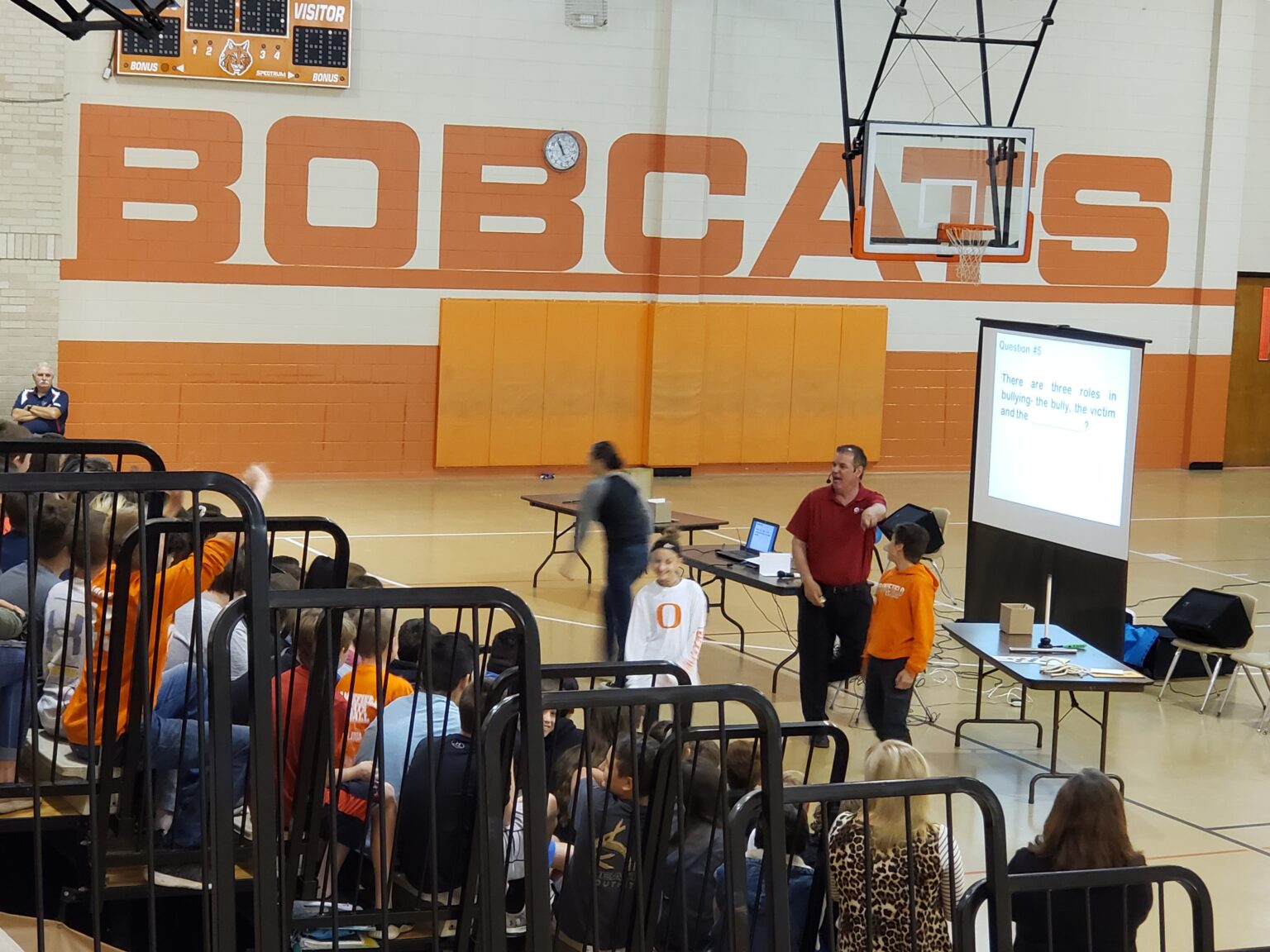
Students remember a decision they practiced. A school assembly can use audience polls, safe fictional scenarios, and a follow-up quiz to ask what a student should do next. The goal is not to make students responsible for enforcement; it is to give them safe ways to connect a concern to an adult.
Jim Jordan's grades 6-12 program uses Be Aware. Be Brave. Be Heard. and See Something Say Something to make classroom safety concrete and memorable.