Article focus
New York City school safety
This article is written for principals, counselors, teachers, school safety teams, and other staff planning proactive middle or high school safety education.
Turn a citywide message into a school-level route
A student in New York City may move between classrooms, activities, and different groups of adults during one day. A general instruction to speak up can leave an important question unanswered: whom should I tell here? The most useful safety lesson starts with the people and procedures in the student's own school, rather than assuming every campus has the same system.
Ask students to identify one adult they can approach during class and a second option outside that period. Teachers, counselors, and administrators should confirm those choices match local procedures. The exercise is a map of support, not a promise that a particular staff member is always available or that an online reporting channel is monitored around the clock.
Practice a first sentence before it is needed
Students do not need to investigate a concern or decide whether it fits a legal definition before asking for help. A useful opening is, 'I saw something that concerns me, and I would like to speak privately.' Follow it with what happened, where, when, and whether anyone may be in immediate danger. Adults can then ask appropriate questions.
Use a fictional classroom example to practice that sentence. A student notices repeated intimidating messages directed at a classmate but is unsure what the messages mean. The learning goal is moving the observation to a responsible adult, without adding guesses, forwarding the messages to friends, or publicly accusing another student.
Make the handoff work across shared spaces
Some school communities share buildings or activity spaces. If that applies to your New York City campus, clarify how a concern reaches the appropriate staff member when the first adult belongs to another program. Students should receive a clear next step instead of being sent away to figure out the organizational structure themselves.
Staff can rehearse a simple handoff: receive the concern, check immediate safety, follow the school's documentation and escalation procedures, and identify who will continue the response. Students should not carry sensitive details between offices as messengers. The receiving adult's role is to make sure the report reaches someone able to act.
Explain privacy honestly
Speaking privately does not mean an adult can promise absolute secrecy. Tell students that information may need to reach people responsible for helping or protecting them. Explain that limit calmly, before a real report arrives, so a student does not feel surprised or betrayed when another appropriate staff member becomes involved.
Avoid asking students to tell personal stories in front of an assembly audience. Offer a private way to seek help afterward and identify the adult who will be available. Families should receive the same explanation of the school process, including the distinction between routine reporting options and urgent help when there is immediate danger.
Use participation to rehearse responsible choices
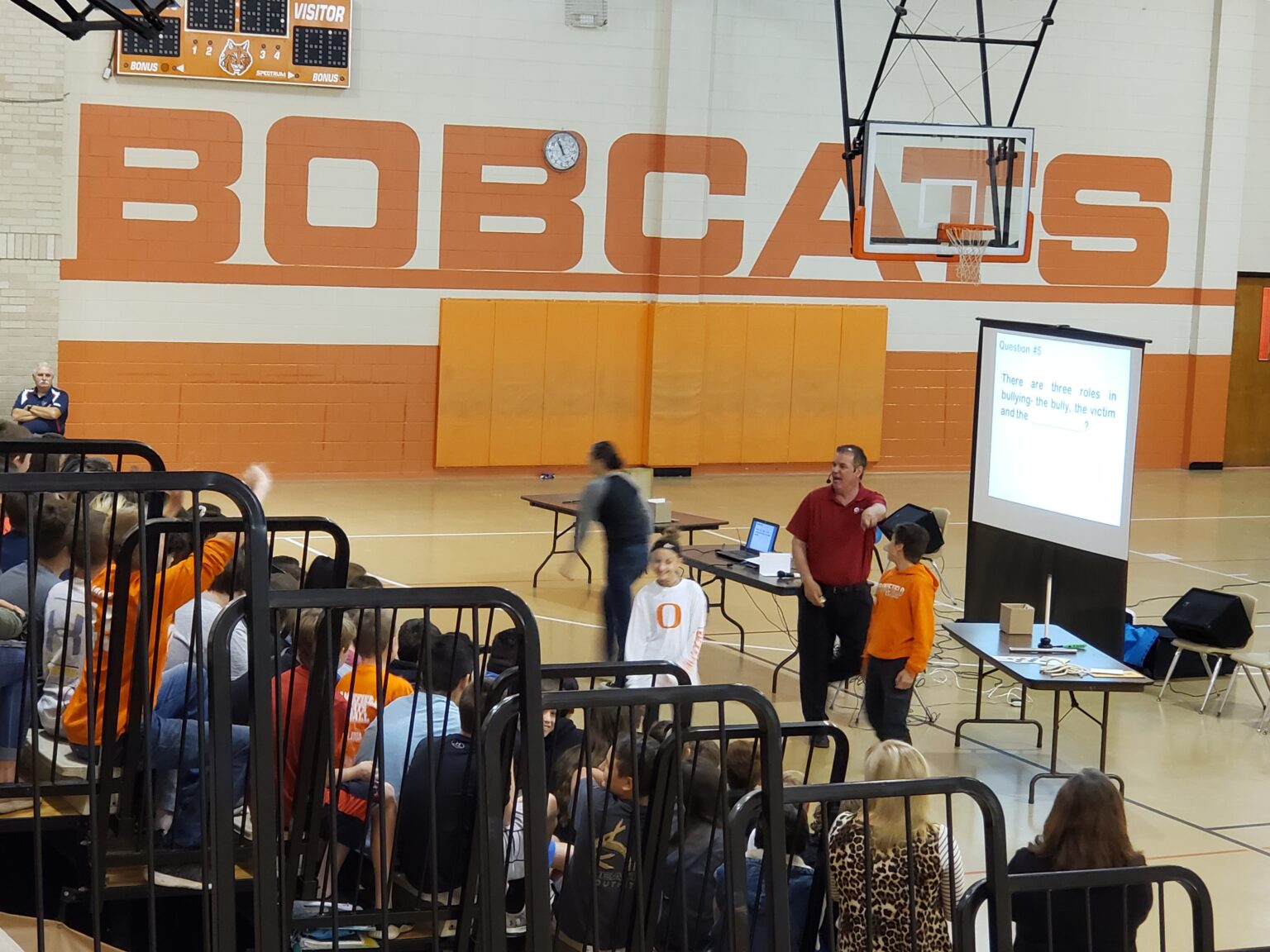
An interactive school safety assembly can make the reporting route memorable without making students fearful. Jim Jordan's grades 6-12 program uses magic, audience participation, videos, and follow-up quizzes around Be Aware. Be Brave. Be Heard. A fictional scenario can connect each phrase to a concrete, safe choice students can discuss.
For a New York City school, the planning conversation should identify the actual adult contacts and reporting language to reinforce. Ask whether separate middle and high school examples would help your audiences. An assembly supports school procedures; it does not replace staff training, emergency planning, or a school's responsibility to respond to concerns.
Check understanding a week later
In advisory or homeroom, ask students to write the first step they would take in a fictional situation and name a backup adult. Do not collect real allegations in a public exercise. If a student raises an actual concern, move it into the school's private reporting process rather than treating it as a class discussion topic.
Review answers for practical gaps: unclear adult roles, uncertainty about where to go after dismissal, or confusion about online channels. Correct those gaps with a short reminder and an updated contact list. Planning a New York school safety assembly starts with this question: what should students be able to do differently after the presentation ends?