Grades 6-12 · All 50 U.S. States
Be Aware. Be Brave. Be Heard.
If you see something be brave and say something
Educational, proactive and highly interactive school safety assemblies for middle and high school students.
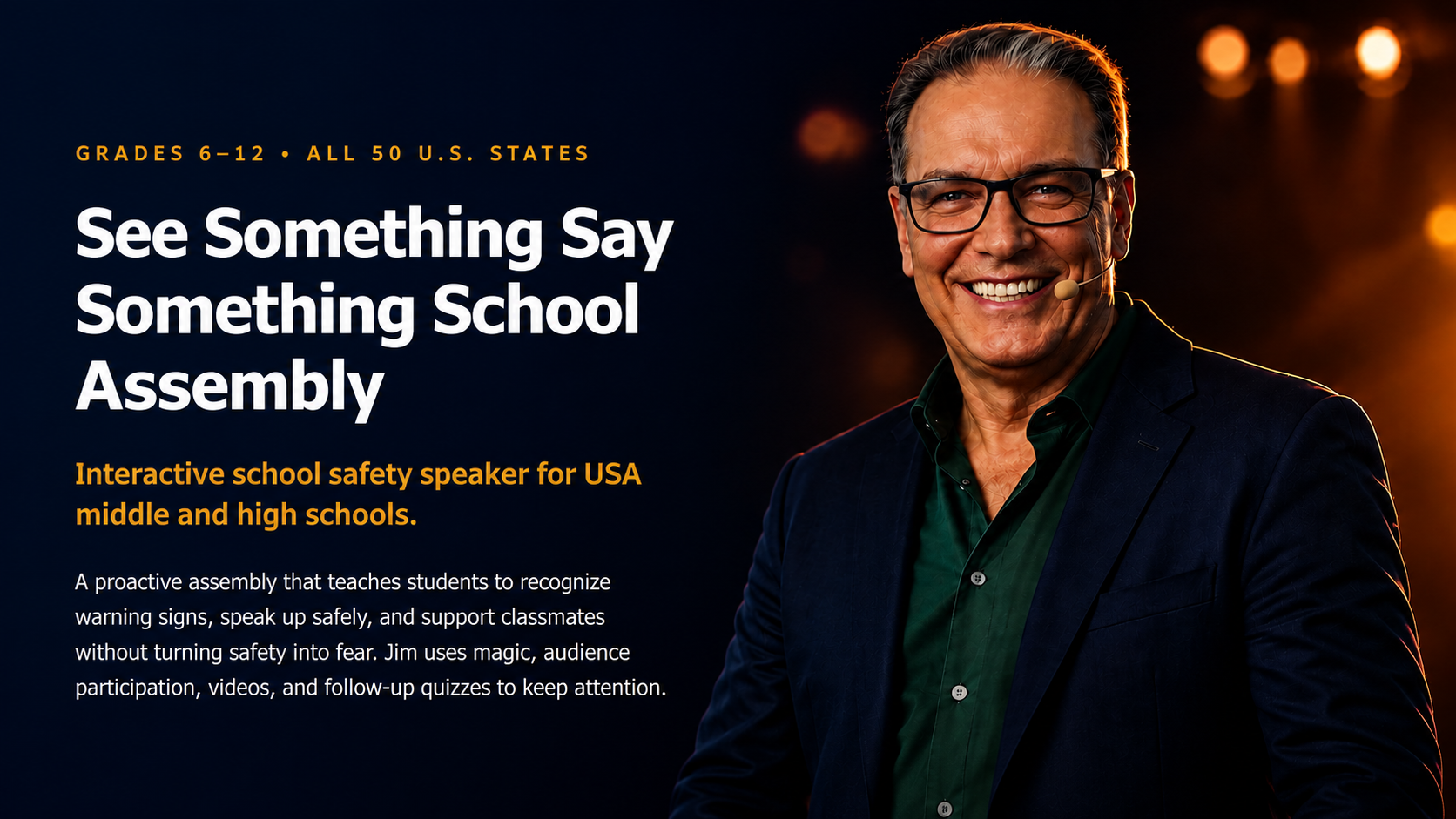
The message students remember
Be Aware. Be Brave. Be Heard.
That is the core of Jim Jordan's school safety assembly. Be Aware means noticing warning signs and concerning behavior. Be Brave means choosing safe action even when speaking up feels uncomfortable. Be Heard means getting useful information to a trusted adult or reporting channel that can respond.
The broader See Something Say Something idea supports those three actions. Jim delivers the message to middle schools and high schools, grades 6 through 12, using magic, audience participation, videos and follow-up quizzes to keep students involved without turning school safety into a fear-based presentation.
Jim has been speaking to students in the USA for 20 years, and schools in all 50 states can inquire about assembly availability.
Grades 6-12
Middle school and high school audiences receive age-appropriate examples while sharing the same Be Aware, Be Brave, Be Heard framework.
All 50 U.S. states
Schools across the United States can inquire about bringing Jim Jordan's proactive safety assembly to their students.
Educational and proactive
The assembly teaches prevention, safe reporting and trusted-adult pathways. The goal is preparation and confidence, not fear.
Highly interactive
Magic, audience participation, videos and follow-up quizzes help keep students engaged while reinforcing the safety message.
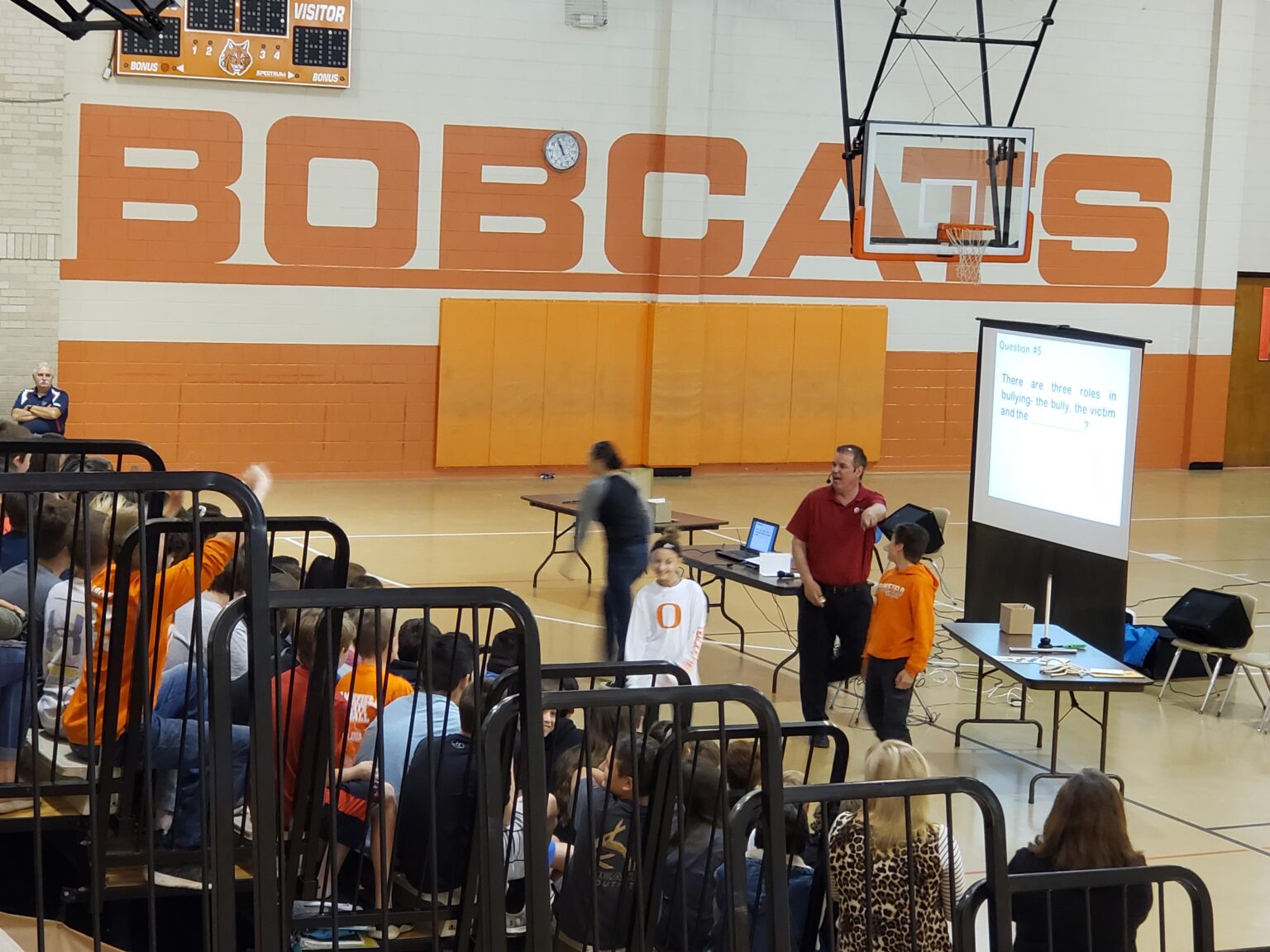
See Jim in action
See the energy and audience interaction schools can expect
Watch a real middle and high school speaking clip to see Jim's live delivery, humor and student engagement. The footage is from a bullying-prevention assembly and is shown to demonstrate speaking style; the Be Aware. Be Brave. Be Heard. school safety program is a separate presentation.
Proactive school safety
See something. Use the three steps. Reach the right adult.
Students learn to distinguish a meaningful concern from ordinary conflict, preserve facts instead of spreading rumors, identify trusted adults, and understand that immediate danger requires emergency help.
Follow-up quiz material gives staff a simple way to revisit Be Aware, Be Brave, Be Heard after the live assembly.
All 50 U.S. states
Be Aware. Be Brave. Be Heard. school safety assemblies by state
Choose a state for middle school, high school and administrator information tailored to that state's school-safety landing page.
From the blog
Guidance for principals and counselors
New York City School Safety: Helping Students Speak Up
A reporting message works when students can name the adult they would approach and explain their concern. Here is a practical way to make that happen in a New York City school.
Los Angeles School Safety: Connect Students, Staff, and Families
Students and families need the same practical explanation of how to ask for help. Los Angeles schools can make that message easier to understand without turning safety communication into a warning campaign.
Chicago School Safety: Teach Bystander Courage Without Confrontation
Students can help a classmate without stepping into danger. A Chicago school safety lesson can define courage as a safe decision, then give students a way to practice it.
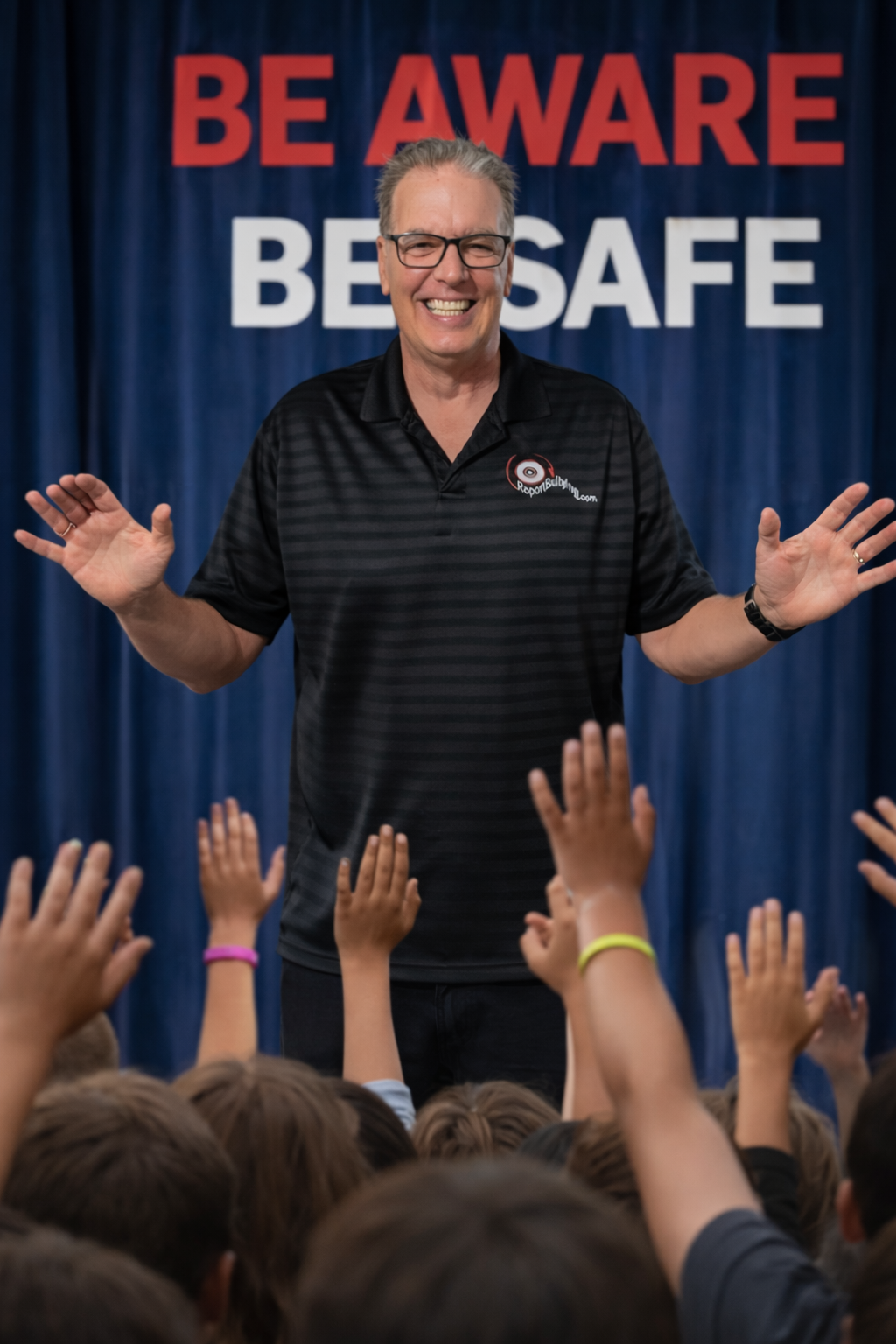
Bring Be Aware. Be Brave. Be Heard. to your students
Email or call to ask about a proactive, interactive grades 6-12 school safety assembly in your state.