Article focus
student reporting Arkansas classrooms
This article is written for principals, counselors, teachers, school safety teams, and other staff planning proactive middle or high school safety education.
Redefine bravery as a safe choice
Students sometimes think bravery means stepping into a confrontation. A safer definition is choosing the next responsible action when something feels wrong. That may be moving toward supervision, telling a trusted adult, or checking on a classmate later with adult guidance.
Arkansas schools can repeat Be Brave as a decision, not a performance. Students should never be required to place themselves in danger to prove courage.
Practice the first sentence
A student can say, 'I am not sure what this means, but I think an adult should see it.' This wording lowers the pressure to be certain and discourages students from making accusations they cannot support.
Teachers can practice the sentence with fictional examples from the classroom, hallway, bus, sports, and online spaces. Keep scenarios anonymous and avoid asking students to identify real peers.
Prevent rumor-based reporting
Responsible reporting is different from passing a story from friend to friend. Students should share direct observations, relevant messages, or their concern with the designated adult, not broadcast it to a group chat.
Staff can model the same behavior by limiting details to people who need them and correcting misinformation without repeating harmful content unnecessarily.
Make courage memorable
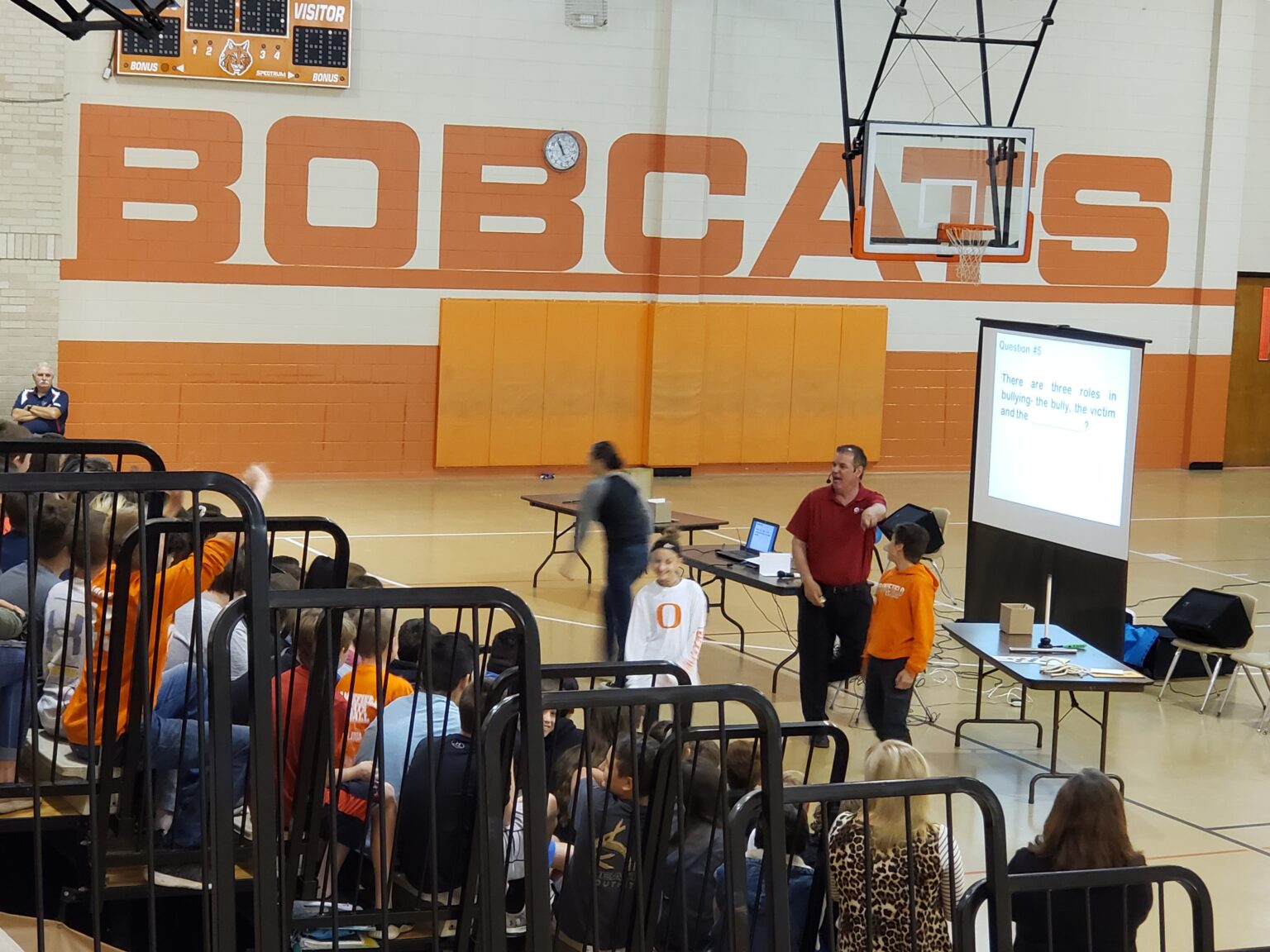
An interactive assembly can use a live audience quiz to compare direct confrontation, silence, rumor sharing, and adult help. Students see that the safest answer may be quiet and practical.
Jim Jordan's grades 6-12 presentation connects Be Aware, Be Brave, Be Heard. with See Something Say Something so Arkansas students leave with language they can use the same day.