Article focus
Connecticut school safety reporting
This article is written for principals, counselors, teachers, school safety teams, and other staff planning proactive middle or high school safety education.
Being heard requires an accountable handoff
A student may tell one adult and still feel ignored if no one explains what happens next. Schools can name a person responsible for receiving, documenting, and routing concerns under local procedure.
Be Heard means more than allowing students to speak. It means building a process where the concern reaches someone able to assess it and the student receives an appropriate follow-up.
Give students concrete options
List the trusted adults, private conversation options, written channels, and urgent routes students can use. Explain which tools are monitored and when a student should go directly to an adult.
Practice a short report with facts: what happened, where, when, who was present, and whether it has happened before. Students do not need to assign motives or decide the final label.
Respect uncertainty and privacy
A student may be unsure whether a behavior is bullying, conflict, a threat, or a misunderstanding. Adults can ask careful questions without dismissing the concern or promising complete secrecy.
Avoid asking students to share a report publicly. Privacy helps protect the student and keeps the school response focused on facts rather than social speculation.
Use participation to build confidence
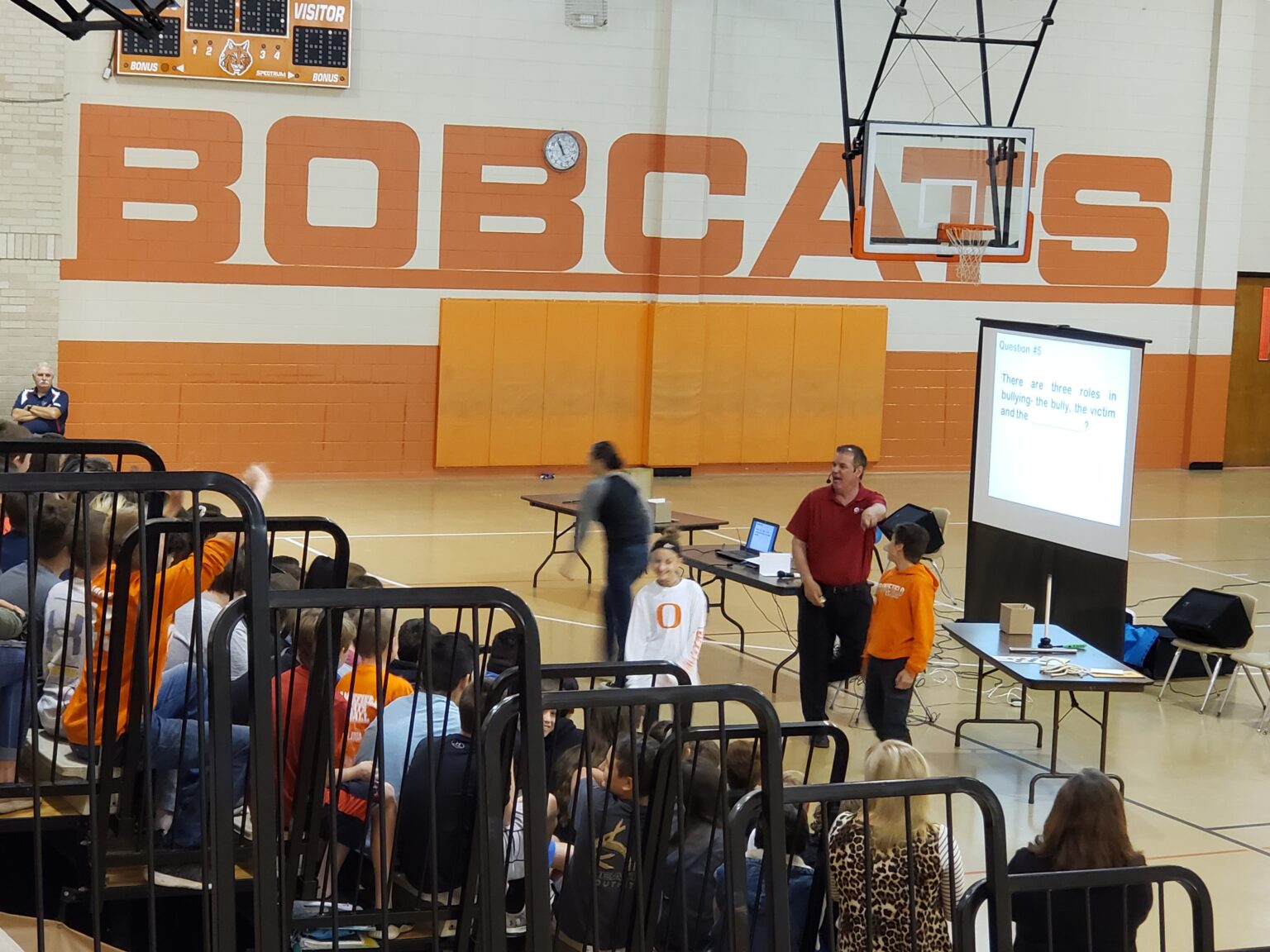
Jim Jordan's interactive safety assembly can present fictional reporting choices and let students answer through a live quiz. The discussion shows how Be Aware, Be Brave, Be Heard. works as a sequence.
See Something Say Something becomes practical when students know exactly who to approach in their Connecticut school and how to ask for help.