Article focus
Kentucky school safety family conversations
This article is written for principals, counselors, teachers, school safety teams, and other staff planning proactive middle or high school safety education.
Ask about the day without interrogating
Questions about lunch, transitions, activities, group chats, and trusted adults can reveal how a student is experiencing school. Avoid assuming a quiet answer means everything is fine or that every difficult day is bullying.
Parents can say, 'If something worries you, we will listen and help you find the right adult.' That keeps the door open.
Use the same three-part language
Be Aware means notice a change or concerning behavior. Be Brave means ask for help safely. Be Heard means keep going until the concern reaches a responsible adult. Families can use the same words the school uses.
See Something Say Something should focus on direct observations and safety, not public accusations or online rumor sharing.
Know when to contact the school
A repeated pattern, threat, physical danger, targeted harassment, or fear of retaliation deserves adult attention. Families should use the school's stated route and ask who owns follow-up.
Parents should not confront another student or family directly as a first step. A private, documented school process protects students and keeps the focus on safety.
Invite families into the assembly message
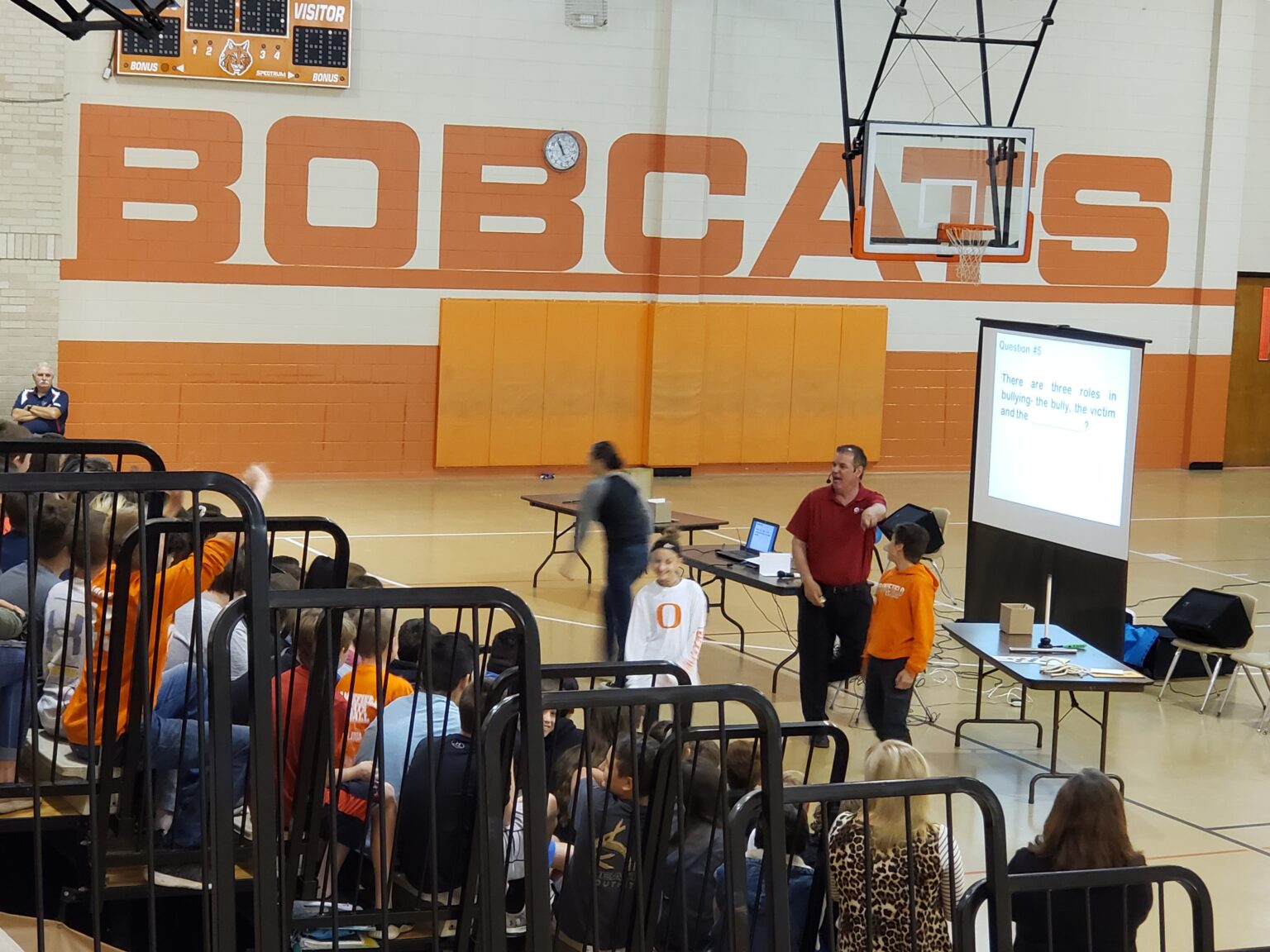
Jim Jordan's grades 6-12 safety assembly uses audience participation, magic, videos, and follow-up quizzes to give students practical choices. Schools can send the same scenarios and reporting sentence home.
Hiring Jim Jordan helps Kentucky schools make student voice a shared responsibility between classrooms, activities, and families.