Article focus
online warning signs for students
This article is written for principals, counselors, teachers, school safety teams, and other staff planning proactive middle or high school safety education.
Why online warning signs are hard for students to judge
Middle and high school students live in a communication environment adults rarely see in full. Group chats move quickly, inside jokes have history, disappearing messages change context, and sarcasm can be difficult to read even for the people inside the conversation. A student may see a threatening sentence and genuinely not know whether it is serious, exaggerated, or part of a joke that has gone too far. That uncertainty is one reason digital safety education needs to be more useful than simply telling students to report everything.
A better message is to teach students how to respond when they are unsure. They do not need to decide whether a post proves danger. They do need to recognize when something stands out enough to deserve adult attention. Be Aware means noticing the pattern, the escalation, or the sudden change. Be Brave means resisting the urge to ignore it because reporting could feel awkward. Be Heard means getting the concern to someone who can assess it responsibly.
Teach students to preserve evidence instead of spreading it
One of the most practical digital habits schools can teach is simple: if a message is concerning, preserve it and stop circulating it. Students often forward screenshots to friends because they want opinions about what the post means. Within minutes, the image can reach dozens of people who add assumptions, reactions, and new rumors. By the time an adult sees it, the original context may be buried under speculation.
When appropriate, a screenshot can help preserve what a student actually saw. That does not mean students should collect evidence as investigators. Their role is limited. Save what is already visible, avoid editing or reposting it, and bring it to the appropriate adult or school reporting process. The adult can decide what additional steps are necessary. This keeps students safer and gives staff cleaner information.
The phrase 'it was just a joke' needs context
Teenagers use exaggeration, dark humor, and irony constantly. That makes blanket rules difficult. A school that treats every unusual post as equally dangerous can lose credibility. At the same time, repeated threats framed as jokes, posts that become more specific, or comments that appear alongside major changes in behavior deserve more attention. Students should learn that context and patterns matter.
The safest instruction is not to diagnose intent. Students are not expected to determine whether a classmate is serious. They can say, 'I do not know what this means, but I think an adult should see it.' That sentence removes the pressure to make an accusation. It also helps students understand that raising a concern is different from declaring someone guilty of something.
Digital responsibility includes what students do after they see something
Online safety is not only about what students post. It is also about what they do when they encounter troubling content. Do they repost it? Add commentary? Tag more people? Confront the student publicly? Or do they step out of the social-media chain and move useful information to an adult? That decision can either calm a situation or amplify it.
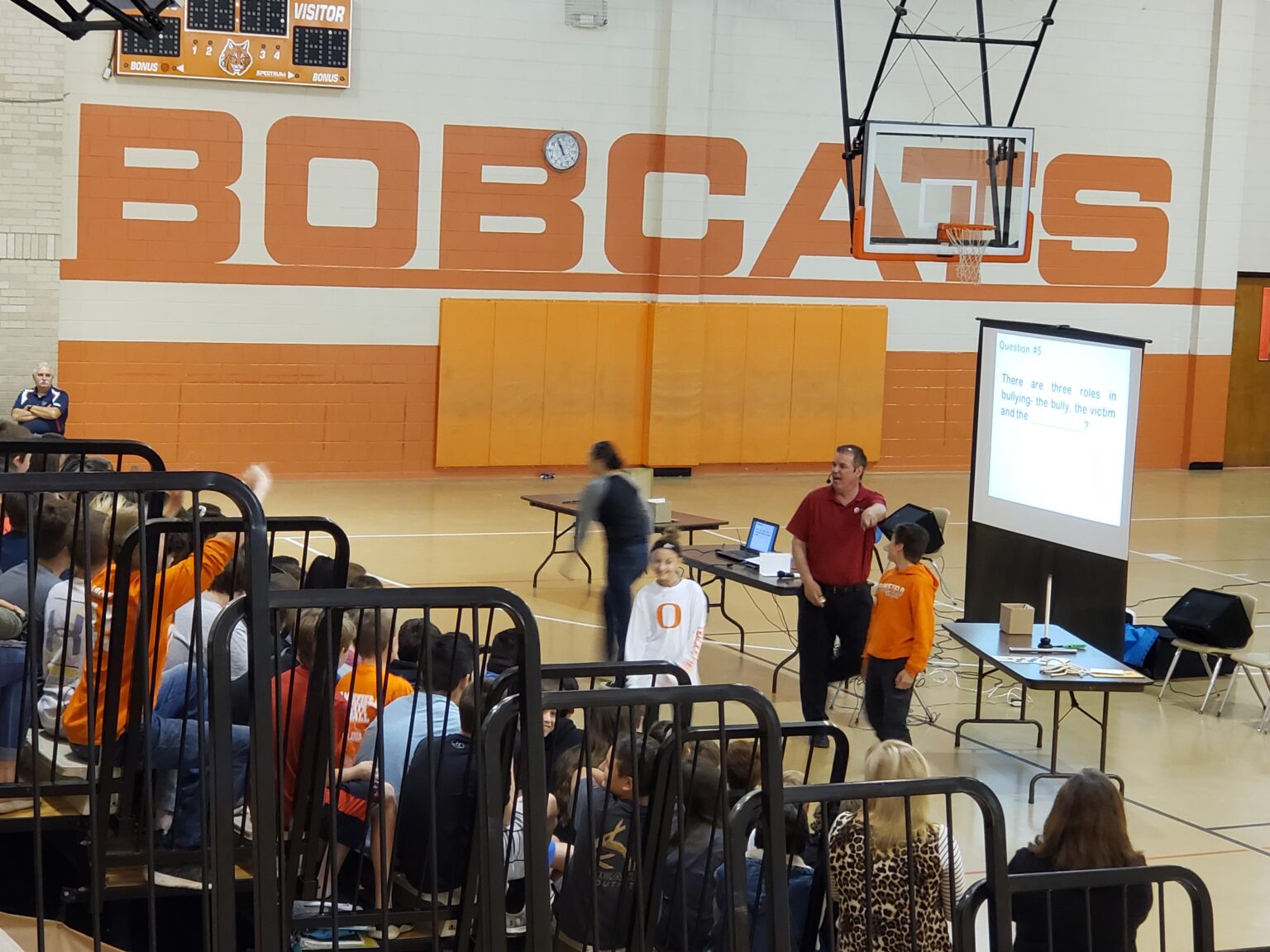
A proactive school safety assembly can connect digital citizenship with real-world responsibility. Students should understand that attention is powerful online. Reposting can reward harmful behavior with a larger audience. Public confrontation can make a situation more volatile. Quietly preserving the information and reaching the right adult is often a safer form of leadership.
Middle school and high school need different digital examples
Grades 6-8 often need more guidance around group-chat pressure, exclusion, repeated harassment, screenshots, and the fear of being labeled a snitch. Their online world can change quickly because friendships are still highly fluid. They benefit from clear language about when a joke crosses into something that deserves adult help and how to start that conversation without feeling dramatic.
Grades 9-12 can handle more complex discussion about intent, evidence, harassment, threats, reputational harm, and leadership. Older students are more likely to be managing multiple social platforms, team chats, jobs, and broader social networks. The high school version should respect that complexity while keeping the core response simple: notice, act safely, and get useful information to someone who can respond.
Schools should make the digital reporting route obvious
Students need to know what the school wants them to do with a concerning online post. Should they email a counselor? Use an anonymous reporting tool? Show a teacher? Call a parent? If there is an immediate threat, when should emergency help come first? Those answers should not be buried in a handbook. They should be repeated in assemblies, advisory periods, digital citizenship lessons, and staff conversations.
The strongest digital safety message is calm and practical. Students do not need to panic every time something feels wrong. They do need a route that feels credible. When the school combines a clear process with a memorable framework such as Be Aware. Be Brave. Be Heard., students are more likely to move from scrolling past a concern to taking responsible action.