Article focus
planning a school safety assembly
This article is written for principals, counselors, teachers, school safety teams, and other staff planning proactive middle or high school safety education.
Start with the outcome, not the calendar
The first planning question should not be 'What date is open?' It should be 'What do we want students to know or do differently after the assembly?' A clear outcome makes the rest of the planning easier. For a proactive school safety program, the goal may be for students to recognize warning signs, identify trusted adults, understand the reporting pathway, and remember a simple framework such as Be Aware. Be Brave. Be Heard.
Once the outcome is clear, the school can decide which audience needs the message, what local procedures should be included, and what follow-up will reinforce it. Without that planning, even an excellent presenter can become a one-hour event disconnected from the school's actual safety process.
Separate middle school and high school audiences when possible
Grades 6-8 and grades 9-12 share many safety concerns, but they do not experience them in the same way. Middle school students often need more guidance around tattling versus reporting, peer pressure, group chats, trusted adults, and the moment a joke stops being a joke. High school students can handle more direct discussion about leadership, digital evidence, harassment, threats, judgment, and bystander responsibility.
When schools combine very young and much older students into one audience, the presenter has to aim toward the middle. Two age-appropriate sessions are usually stronger because the examples, humor, pacing, and language can match the room. Back-to-back sessions on the same day can still keep the schedule efficient.
Choose a room where students can see, hear, and stay focused
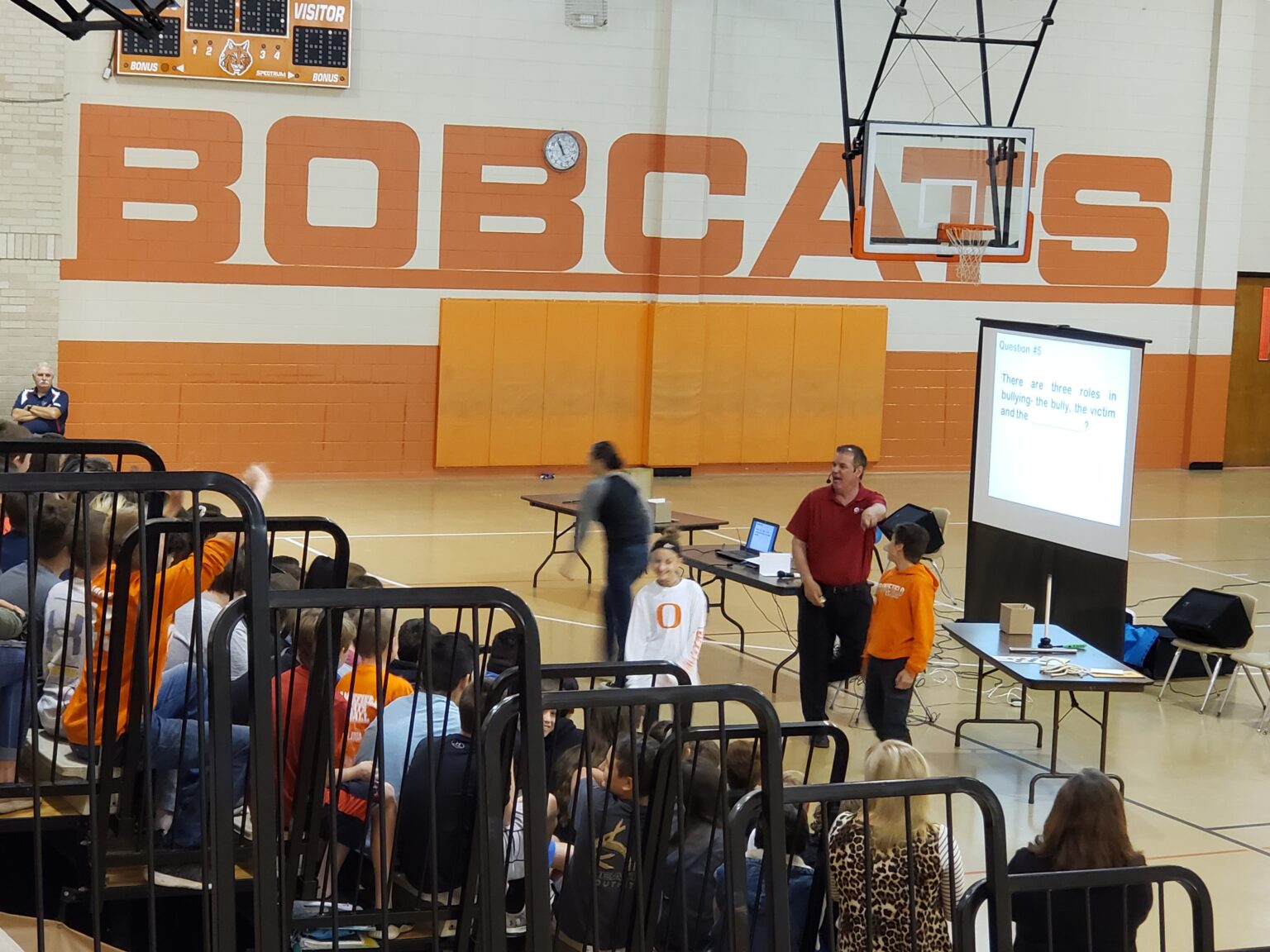
A gym, auditorium, or cafeteria can all work if the setup supports attention. Sound is the most important technical issue. Students in the back row should hear the presenter clearly without strain. Sightlines matter too. If students are spread along several walls or seated at odd angles, the room becomes harder to manage and participation becomes less effective.
Staff placement can help. Rather than clustering all adults in the back, distribute staff through the audience. That improves supervision and makes trusted adults visible. If a projector or screen is being used, test it before students arrive. Simple logistics can have a major effect on whether the presentation feels organized and professional.
Decide which reporting pathways the speaker should reinforce
A school safety assembly is most useful when students hear the actual process used in their building. Before the presentation, administrators should decide which counselors, reporting tools, tip lines, administrators, school resource officers where applicable, or other channels they want mentioned. The speaker should not guess or invent a local process.
This is also the time to clarify emergency language. Students should understand that immediate danger requires emergency help, while other concerns may move through normal school channels. The school remains responsible for its policies and procedures; the assembly helps make those procedures easier for students to remember and use.
Plan for interaction, not just seating
If the presentation uses magic, volunteers, audience questions, or video, the room should support those elements. Make sure there is enough space at the front for safe participation. Know where volunteers will enter and exit. If students will respond by show of hands or whole-room interaction, arrange seating so the presenter can see the audience.
Interactive elements are especially useful in school safety because they keep students mentally active. A serious message can still be engaging. The best activities are connected to the lesson: noticing details, understanding how rumors change, practicing a reporting sentence, or recognizing how peer pressure affects decisions.
Prepare staff for what may happen after the assembly
A student may decide to speak with an adult after hearing the presentation. Counselors and administrators should know that possibility exists. Teachers should understand where to direct a concern and how to respond calmly if a student approaches them. The school does not need to create anxiety around the event, but staff preparation prevents confusion.
It can also help to decide how the school will communicate generally if students use the reporting process afterward. Without sharing confidential details, leaders can reinforce that responsible reports are reviewed and appreciated. That closes the loop and strengthens trust.
Build the follow-up before assembly day
Follow-up should be planned before the event rather than added later. Decide who will run the quiz, when advisory teachers will revisit the message, whether posters or digital reminders will be used, and how counselors will reinforce the same language. A good plan might include a quiz within one week and a short reminder several weeks later.
The goal is not to keep students talking about safety every day. It is to make the reporting framework familiar enough that they can recall it when needed. Be Aware. Be Brave. Be Heard. works well as a repeatable structure because each phrase points to a behavior.
A well-planned assembly feels simple to students
Students should not see the complexity behind the event. They should experience a clear, energetic program that respects their age, keeps their attention, and leaves them with a few useful ideas. The logistics, reporting coordination, and staff preparation happen in the background so the student experience can stay simple.
For principals planning a grades 6-12 school safety assembly, that simplicity is the goal. Choose the right audience, prepare the room, identify the reporting pathway, support interaction, and plan the follow-up. The speaker provides the live experience; the school connects that experience to its everyday culture. When those pieces work together, an assembly can become more than a date on the calendar.