Article focus
reporting facts instead of spreading rumors
This article is written for principals, counselors, teachers, school safety teams, and other staff planning proactive middle or high school safety education.
Rumors grow because people fill in missing pieces
Students do not usually spread inaccurate information because they are trying to cause harm. Often they are trying to make sense of something incomplete. One person hears a sentence, another sees a screenshot, someone else adds a name, and by lunchtime the story feels much more certain than the original information ever was. That is normal human behavior, but in a school safety situation it can create confusion, panic, and unfair accusations.
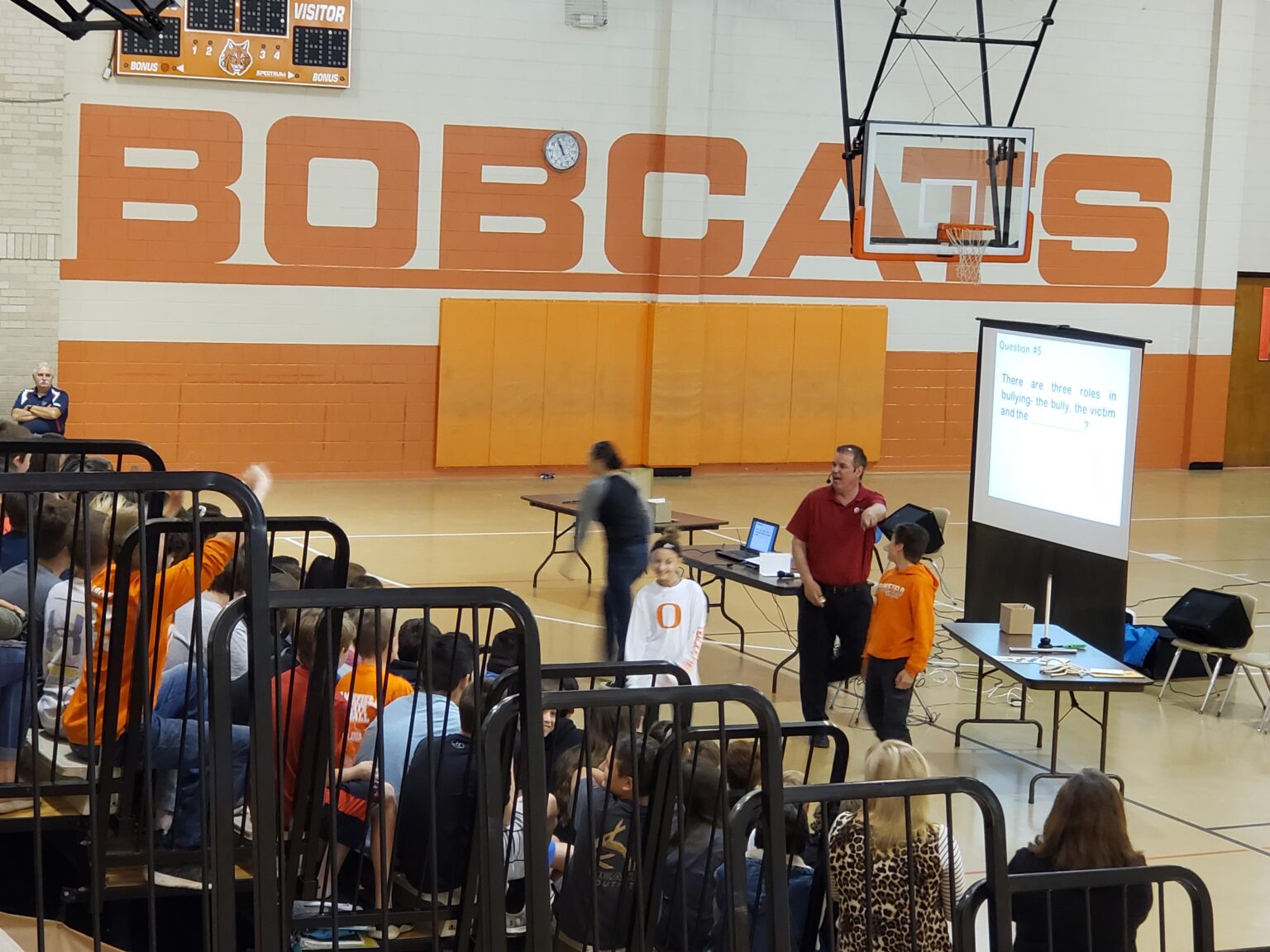
A school safety assembly can make this visible through audience participation. When information is passed through several people, small changes appear quickly. Students laugh because the result is surprising, but the lesson is serious: what reaches the last person may not match what the first person actually saw. That is why reporting facts is a skill, not just a rule.
Teach students a simple facts-first reporting structure
Students can improve the quality of a report by separating direct knowledge from secondhand information. A useful starting structure is: What did you personally see or hear? Where and when did it happen? What part are you unsure about? If someone else told you something, say clearly that it came from someone else rather than presenting it as a fact.
This does not require perfect memory. Students should never feel they need to write an incident report before asking for help. The point is to slow down the tendency to add interpretation. 'I saw this message at lunch' is stronger than 'Everyone says something bad is going to happen.' Specific information gives school staff a better place to begin.
Screenshots should preserve information, not become entertainment
Digital rumors move faster because screenshots feel like proof even when they are incomplete. A cropped image may remove context. A repost may hide the original account. A screenshot can still be useful, but the safest habit is to preserve it and give it to the appropriate adult rather than turning it into content for the group chat.
Students should also avoid editing, annotating, or adding dramatic captions before they report. Those additions may change how others interpret the information. The goal is not to build a case. It is to share what was seen so an adult can assess it using the school's process.
Facts-first reporting protects the person raising the concern
Students sometimes avoid reporting because they fear being wrong. Teaching facts-first language reduces that fear. A student can say, 'This is what I saw and I do not know what it means.' That is honest. It does not require certainty. It also gives the adult room to investigate or ask questions without making the student feel responsible for the outcome.
This approach supports Be Brave because courage is not the same as confidence in every detail. A student can act responsibly while still admitting uncertainty. That is often exactly what school staff need: the original information before it has been shaped by the crowd.
Accurate reporting protects the person being talked about too
Fairness matters in school safety. Inaccurate rumors can damage reputations, isolate students, and create conflict even when the original concern was small or misunderstood. Teaching students to separate facts from assumptions protects the person being discussed as well as the person reporting. Staff can respond more fairly when they know what was actually observed.
Students often respond well to this point because it reframes accuracy as respect. The goal is not to silence concerns. It is to move them to the right place in the cleanest form possible. That supports both safety and fairness.
Make facts versus rumors part of the school culture
The lesson should not appear only during an emergency. Teachers can reinforce it during digital citizenship, English discussions about sources, advisory periods, and everyday conflict resolution. Counselors can ask students, 'What part did you see yourself?' Administrators can model the same distinction when communicating with families. Over time, the school develops a shared expectation that serious information deserves careful handling.
Be Aware. Be Brave. Be Heard. becomes stronger when Be Heard means being useful, not merely being loud. A student who reports facts to the right adult is helping the school respond. A student who adds speculation to a group chat may unintentionally make the situation harder. That practical difference is one of the most valuable habits a school safety assembly can teach.