Article focus
audience participation school safety assembly
This article is written for principals, counselors, teachers, school safety teams, and other staff planning proactive middle or high school safety education.
Serious content still has to earn student attention
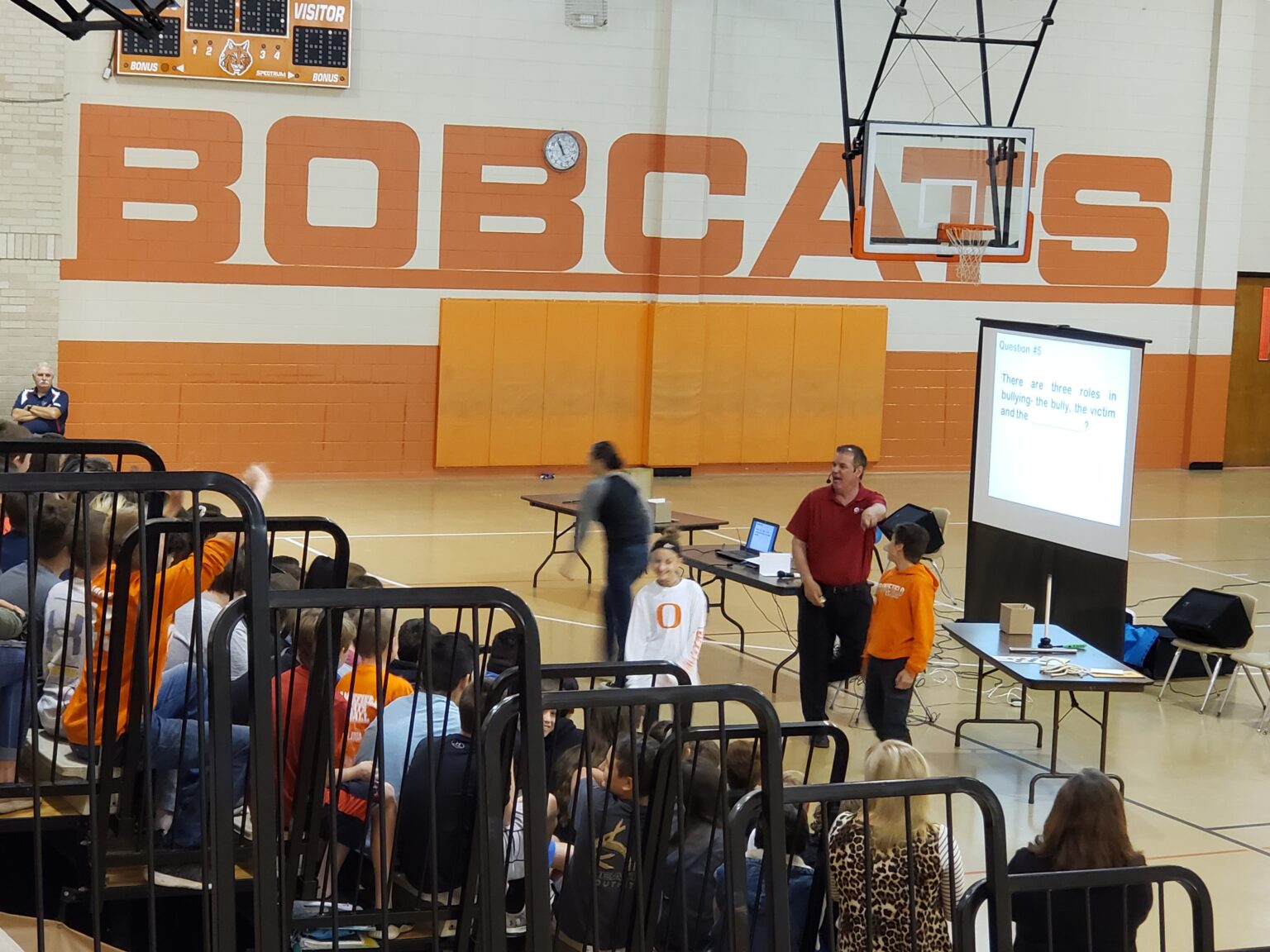
A school can have the best safety message in the world and still lose the room if the delivery feels like another lecture. Middle and high school students spend much of the day listening to adults explain things. By the time they arrive in a gym or auditorium, they can tell almost immediately whether the presentation will require their attention or simply fill time. That is why audience participation matters. It gives students a reason to look up, react, predict, volunteer, and think about what is happening in front of them.
The goal is not entertainment for entertainment's sake. The goal is attention in service of learning. Magic can create curiosity. A volunteer can make an abstract idea physical. A short video can reset the pace. A whole-room question can show students that many of their peers have the same uncertainty. When those elements are connected directly to Be Aware. Be Brave. Be Heard., the presentation feels active without losing the seriousness of the safety message.
Magic can demonstrate how easily we miss what matters
Magic works well in a school safety assembly because it naturally raises questions about attention, assumptions, and observation. Students are trying to figure out what happened. That mental state creates an opening for a useful point: people can be confident they saw everything and still miss an important detail. In school life, warning signs can be easy to dismiss because they appear in familiar places such as group chats, lunch tables, hallways, or jokes between friends.
A strong presenter does not force a serious lesson onto every trick. The connection has to feel natural. After a visual routine, for example, the speaker can ask what students noticed, what they assumed, and what changed when they looked again. That conversation supports Be Aware without becoming preachy. The magic earns the attention; the discussion turns that attention into a safety habit.
Student volunteers make the lesson visible
A student on stage changes the energy of the entire room. Their peers pay closer attention because someone like them is part of the lesson. This is especially useful when teaching about rumors, communication, and reporting. A volunteer exercise can show how information changes as it moves from person to person, how quickly assumptions become facts in a group, or why the original source matters when adults are trying to understand a concern.
The most effective participation is respectful. Students should never be embarrassed, frightened, or used as examples of unsafe behavior. The volunteer should leave the stage feeling successful. That matters because the audience is learning from the emotional tone as much as the content. If participation feels safe, students are more willing to engage. If it feels risky, they shut down. A proactive school safety assembly should model the same respect it asks students to show when someone speaks up.
Video helps change the pace without losing the message
Short videos can be useful when they do something the live presenter cannot do as efficiently. A video might show a realistic digital scenario, a student decision point, or a brief example that creates discussion. The key is length. Long videos can turn the assembly into passive viewing. Short clips work better when they are followed immediately by a question, a reaction, or a connection to the reporting framework.
Video is also helpful for students who process information differently. Some students respond best to a spoken explanation, others to a visual example, and others to participation. Mixing formats keeps the presentation moving and makes the content more accessible. It also reduces the sense that school safety is one long serious talk. Students can stay engaged emotionally without being overwhelmed by the topic.
Follow-up quizzes turn a performance into instruction
The assembly should not depend on students remembering everything after one exciting hour. A short follow-up quiz gives teachers and counselors a reason to revisit the key ideas later. The questions do not need to be complicated. What does Be Brave mean? Name one trusted adult. What should you do with a concerning screenshot? When should emergency help come first? Retrieval helps students practice the information rather than simply hearing it once.
Quizzes also help administrators see whether the most important points survived the presentation. If students remember the magic but cannot explain the reporting pathway, the follow-up needs to reconnect those pieces. If they remember both, the interactive format did its job. That is why the entertainment should always be tied to a specific lesson. The strongest assembly is memorable for the right reasons.
Fun and safety are not opposites
Some adults worry that humor or magic will make a serious topic feel less serious. The opposite can happen when the presentation is designed carefully. Students are more willing to stay present when the room feels human, energetic, and respectful. The fun creates emotional breathing room, which makes it easier to discuss warning signs, peer pressure, reporting, and trusted adults without turning the experience into an anxiety-producing event.
For schools evaluating an interactive school safety speaker, the question is not whether the presenter is entertaining. The better question is whether the entertainment supports the learning goals. Does the audience participation help students understand? Does the magic connect to attention or decision-making? Do the videos add useful context? Do follow-up quizzes reinforce the same framework? When the answer is yes, interaction is not a distraction from safety education. It is one of the tools that helps the message stick.