Article focus
what to do after a school safety assembly
This article is written for principals, counselors, teachers, school safety teams, and other staff planning proactive middle or high school safety education.
The first 24 hours matter more than most schools realize
A school safety assembly can prompt students to reconsider things they have already seen or heard. That means counselors, teachers, coaches, and administrators may receive new questions or reports shortly after the program. Schools should prepare for that possibility before students enter the gym. Staff do not need to expect a flood of emergencies, but they should know that a student may choose that afternoon to speak about something they have been holding onto.
The adult response sets the tone for everything that follows. A calm thank you, a private conversation, and a clear explanation of the next step can reinforce the entire assembly. A dismissive or highly public response can undo it. Students share experiences quickly. If one reporter feels respected, peers hear that. If one reporter feels embarrassed, peers hear that too.
Repeat the three-step message while it is still fresh
The day after the assembly is a good time to reinforce Be Aware. Be Brave. Be Heard. without repeating the entire presentation. A short morning announcement, advisory prompt, or teacher reminder can be enough. Students should hear the same language, not a completely new safety slogan. Repetition works best when it strengthens memory rather than creating more terms to remember.
A principal can also remind students of the school's actual reporting routes. Name the counselor, anonymous system, administrator, tip line, or other process the school wants students to use. This is especially important because the emotional energy of an assembly fades faster than the practical habits built afterward.
Use a short follow-up quiz to check retention
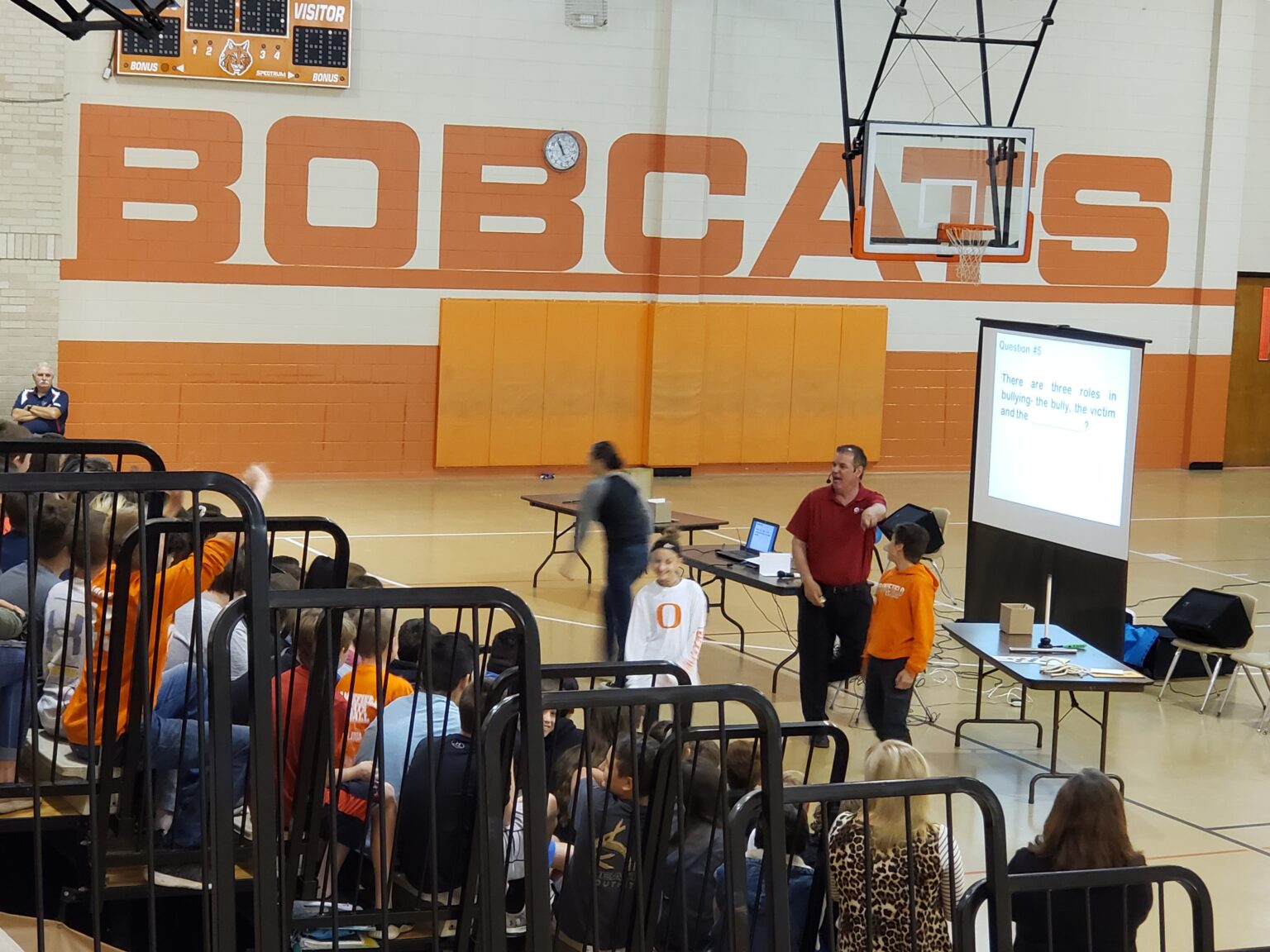
A follow-up quiz does not need to feel like a test. Three to five questions can tell the school whether students remember the important ideas. What does Be Brave mean? Who is one trusted adult in this building? What should you do with a concerning screenshot? What is the difference between reporting and spreading a rumor? When should immediate danger be treated as an emergency?
The value is twofold. Students retrieve the information, which strengthens memory, and staff receive feedback about what needs more explanation. If students remember the speaker but cannot name the reporting pathway, the school knows where to focus. If they can explain the path clearly, that is evidence that the practical message landed.
Close the loop without violating confidentiality
Students are more willing to report when they believe the system does something. Schools cannot share private details, and they should never identify students involved in a concern. But leaders can still communicate that the process is active. A principal might say that students used the reporting pathways after the assembly, staff followed up, and the school appreciates responsible communication.
That kind of general feedback matters because silence can look like inaction. Students often assume nothing happened when they are not told the outcome. A simple reminder that reports are reviewed can strengthen trust without revealing confidential information. The message is not 'we will tell you everything.' It is 'your decision to speak up enters a real process.'
Give teachers and counselors one shared follow-up plan
Staff should not have to invent their own post-assembly message. A one-page follow-up guide can include the three key phrases, the school's reporting route, a few discussion questions, and guidance on what to do when a student brings forward a concern. That consistency prevents one classroom from reinforcing the assembly while another unintentionally undermines it.
Counselors can use the same language during individual conversations. Coaches can repeat it at team meetings. Student leaders can use it in peer discussions. The more settings that use the same framework, the more likely students are to remember it under stress.
Evaluate the assembly based on behavior, not applause
An energetic audience is a good sign, but it is not the final measure of a school safety assembly. The better questions come later. Can students name a trusted adult? Do they know the difference between reporting and rumor-sharing? Are they more comfortable asking an adult to look at something they are unsure about? Do staff know how to receive those concerns? Those outcomes matter more than whether the room laughed at the right moments.
A principal does not need a complex research study to learn from the event. A short student survey, a quiz, a staff debrief, and a review of common questions can be enough. The goal is continuous improvement. The assembly creates a shared starting point. The school's follow-up turns that starting point into a stronger everyday safety culture.